
What Is the Function of a Conveyor?
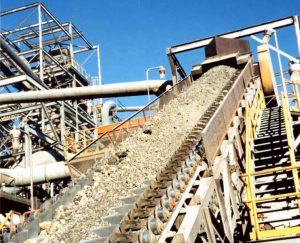 Transporting items from point A to Point B is a common occurrence for almost any type of business and is often accomplished by manpower. However, when the “items” that need to be moved are heavy, dangerous, or difficult to contain and need to be moved continuously in large quantities, a conveyor comes into play. The use of conveyors for material handling has been occurring since as far back as 1795, when basic conveyor systems were used to move grains a short distance. By definition, a conveyor is any piece of mechanical equipment that moves materials from one location to another. In day-to-day business, this could be a belt that is used to sort packages, items coming off a production line, or luggage headed to an airplane cargo hold. For industrial purposes, however, conveyors are much more specialized and must be able to withstand many different types of environments.
Conveyors Are Utilized for Many Different Industrial Materials
Heavy-duty conveyors are an integral part of many different industries that rely on the efficient transport of bulk materials. These materials can include sludges, solids, and extremely hazardous compounds that are utilized at some point in a production process. Some of the more common examples include:
- Cement
- Wood chips
- Aggregates
- Industrial waste
- Paper pulp
- Food waste
- Boiler, bottom, and fly ash
- Biomass
- Minerals
- Clinker
Types of Conveyors
The type of conveyor a company utilizes is determined by several factors, including the material that needs to be moved, the distance it needs to go, and the speed by which it must travel. Options include:
Drag Conveyor
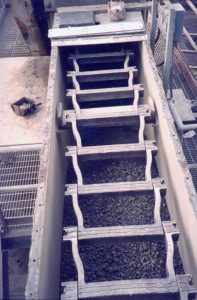
A drag conveyor consists of a chain connected to plates that are pulled through a trough.
Bucket Elevator
If you need to elevate the material, a bucket elevator that utilizes gravity or centrifugal force might be a good option.
Screw Conveyor
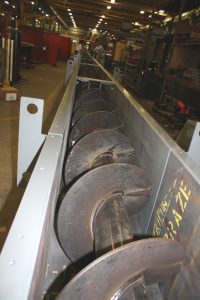
Screw conveyors are ideal for sludges or fine materials that must be contained in a tube. A rotating screw blade within the tube accomplishes this goal.
Apron Conveyor
Also known as a pan conveyor, this type utilizes overlapping plates that form the carrying surface. It is ideal for abusive environments.
Belt Conveyor
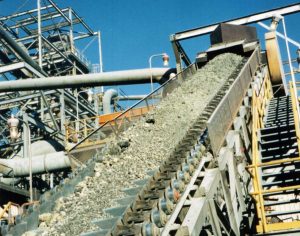
The simplest of conveyor models, a belt conveyor can be used in almost any industry and works with a wide range of materials.
Heavy-Duty Conveyors From Materials Handling Equipment
Since 1927, industrial businesses with material conveyance needs have been relying on Materials Handling Equipment (MHE). We differ from our competitors by offering completely customized conveyors that are engineered for the most severe environments imaginable. We utilize custom-engineered drive components, wear-resistant alloys, and internal Ni-Hard gravity take-up bearings to manufacture conveyors that perform their duties reliably, decade after decade.
If you are interested in learning more about the heavy-duty custom conveyors we offer, contact MHE today to schedule a consultation. We look forward to helping your plant reach new levels of productivity.
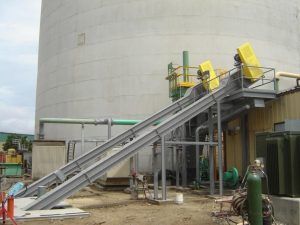 As the name implies, material is dragged along the conveyor by either a single chain or multiple chains with a paddle. At many industrial plants, it’s crucial to be able to move bulk material quickly and reliably. Whether you’re dealing with cement, clinker, lime, coal, wood chips, phosphate, food waste, grains, or ash, a dependable conveyor is a must to keep things up and running. There are many different types of conveyors to choose from, and the best one for a given situation is usually determined by the type of material that needs to be conveyed and the distance it needs to move. One of the more popular options is a drag conveyor, which is sometimes referred to as a drag chain, drag flight, or en-masse conveyor.
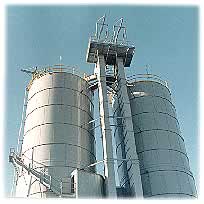 A bucket elevator is one of the most common types of industrial conveyors and is utilized by companies in a wide array of industries. When large quantities of bulk material need to be moved vertically in an efficient and reliable manner, a bucket elevator is often the best option. In this article, we will explain how exactly bucket elevators work and discuss some of the applications for which they are popular.
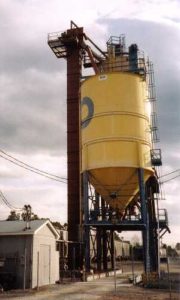 Since 1927, Materials Handling Equipment (MHE) has been manufacturing custom bucket elevators for industrial plants throughout the United States. We are recognized as pioneers in several classes of conveyors, including mill-duty and cement-duty. While many other conveyor manufacturers offer cookie-cutter options, our bucket elevators are custom-manufactured to fit the space they will occupy and the application they will be used for. Additionally, we utilize special wear-resistant alloys and customized components, so our bucket elevators provide decades of reliable service in the most severe environments imaginable. In fact, many of our custom conveyors are still in service more than half a century after delivery.
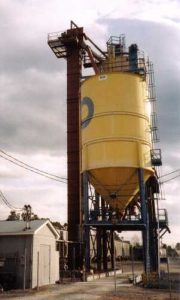 One of the most common types of conveyors you’ll find at industrial facilities is the bucket elevator. This style of conveyor is a workhorse for a variety of industries and can reliably and efficiently move large quantities of bulk material. They are used effectively in a wide variety of industries, including:
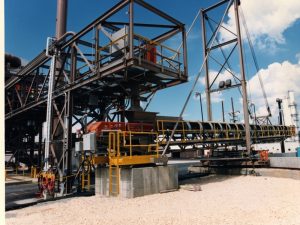 If you’re in the market for a conveyor for your factory or industrial plant, you don’t have to settle for a pre-fabricated, “cookie-cutter”-style conveyor that only meets some of your needs. Materials Handling Equipment (MHE) can custom-manufacture a heavy-duty conveyor that is designed to check all the boxes for your company and will provide the efficiency and productivity gains you’re hoping for. Our team of experts will work with you to design the ideal custom
 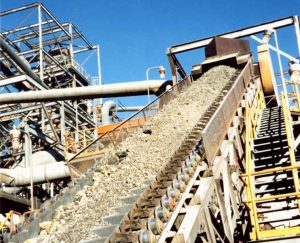 The harsher the environment, the more durable the conveyor will need to be. MHE is recognized for producing conveyors that can handle the most extreme conditions, including severe corrosion and abrasion and high temperatures, without missing a beat. Our conveyors last for decades in extreme environments thanks to upgrades like custom-engineered drive components, special wear-resistant alloys, and internal Ni-Hard gravity take-up bearings.
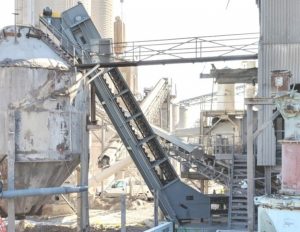 The right kind of conveyor system can do wonders for the productivity of a factory or industrial plant, as it can eliminate some steps in the manufacturing process and accomplish others much more efficiently. If you’re in the market for a heavy-duty conveyor system for your company, the first question that likely came to mind is “How much will it cost?” There’s no simple answer to that question, however, as there are many different factors that will come into play when determining the initial costs your company will face. Yes, there are “cookie-cutter” conveyor systems on the market that have set prices, but these are not a good option for companies that want a conveyor that accomplishes specific goals and is manufactured to fit in a pre-determined space.
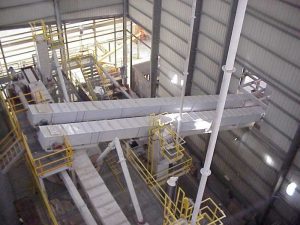 One of the biggest differentiators in the conveyor industry is the ability of a conveyor to reliably perform in extreme environments. Simply put, many of the products on the market aren’t engineered to be able to handle extreme corrosion, severe abrasion, and high temperatures for long periods. At MHE, we utilize heavy-duty elements, such as custom-engineered drive components, special wear-resistant alloys, and internal Ni-Hard gravity take-up bearings. This ensures that our
 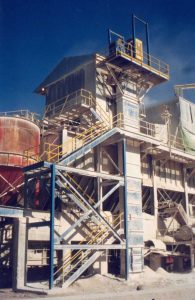 If your company deals with any type of bulk material that needs to be moved quickly and efficiently, there will likely come a point where a custom conveyor becomes a necessity. Conveyor systems are able to transport all types of materials with unmatched efficiency, and you can count on them to perform year after year in hazardous conditions. While the initial setup costs may be high, there’s no doubt that a custom conveyor system will pay for itself in almost no time.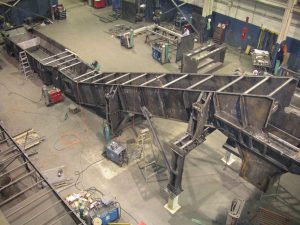
 If you need to move large quantities of bulk material quickly and efficiently at an industrial plant, you’re probably trying to determine which type of industrial conveyor will work best for your needs. Industrial conveyors that are made well can handle all types of materials and can function in the most extreme environments, and you’ll likely have several different options to choose from. The most important variables to consider when choosing the right conveyor are:
 This type of conveyor can elevate both light and heavy bulk materials and is effective for materials that are fine or coarse with large lumps. They can be used for food, cement, wood chips, etc., and depend on centrifugal force to get materials into the discharge chute, or on gravity if a slower discharge is required.
 An industrial conveyor, if manufactured properly, can provide decades of service, moving large quantities of bulk material quickly and reliably. However, like any type of industrial equipment, a conveyor will eventually need to be replaced. Deciding when a new conveyor is needed isn’t always easy, especially considering the time and expense involved in a conveyor replacement project. Additionally, being without a conveyor for days or weeks at a time can bring your company to a standstill. If you want to plan ahead to ensure a smooth transition, be cognizant of the following reasons why a conveyor may need to be replaced:
 If your current industrial conveyor was custom-manufactured to meet a highly specific application but your company heads in a different direction or starts working with additional types of bulk material, you may need to replace it. Different types of conveyors are needed for various bulk materials. For instance,